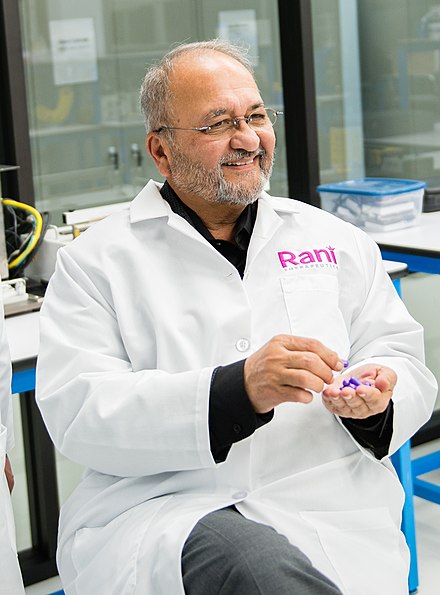
Mir A. Imran (born 1956, Hyderabad, India), is an Indian medical inventor, entrepreneur and venture capitalist. Imran has formed over 20 medical device companies since the early 1980s and holds over 400 patents. He is known for his role in developing the world’s first implantable cardiac defibrillator.
In 2017, Imran was elected a member of the National Academy of Engineering for his role in creating the first implantable cardiac defibrillator, and for developing multiple other technologies as inventor and entrepreneur.
He joined Intec Systems in 1980 and developed IP key to the development of the automatic implantable defibrillator, a device that has saved hundreds of thousands of lives, and has become a standard of care in cardiology. Intec Systems was acquired by Eli Lily, spun out to form Guidant, and acquired by Boston Scientific in 2006 for $27.5 billion.
In 1992, Imran invented a cooled RF ablation catheter for the treatment of ventricular arrhythmias. This invention became the initial product of Cardiac Pathways, and is now widely used by cardiac electro-physiologists.
In 1995, he developed a low-pressure balloon and aspirator system for use in catheter-based interventions. Imran was the first to articulate the concept of embolic protection during high-risk interventions, and his device became the primary innovation for Percusurge, which was acquired by Medtronic in December 2000.
In 2017, Imran announced the development of the Rani pill, a novel approach to the oral delivery of large drug molecules which previously have only been deliverable via injections. Imran describes this development as “a mini swallowable auto-injector” that delivers the drug directly into the highly vascular intestine wall, allowing the drug to be absorbed quickly into the bloodstream.
Imran’s research interests are wide-ranging and include tissue engineering, gastroenterology, nephrology, neurology, orthopedics, congestive heart failure and artificial organs.
Imran founded InCube Labs in 1995 after forming eight venture-backed medical device companies. Imran’s concept was that InCube would function as an applied research institute. Since the formation of InCube Labs, Imran has formed more than 20 life sciences companies. These include Rani Therapeutics, which was established in 2012 after beginning as a research project within InCube Labs.